
MCC for Vegetarian Capsule Filling: A Formulation Guide
Oct 23, 2026
Understanding MCC's Role in Vegetarian Capsule Filling
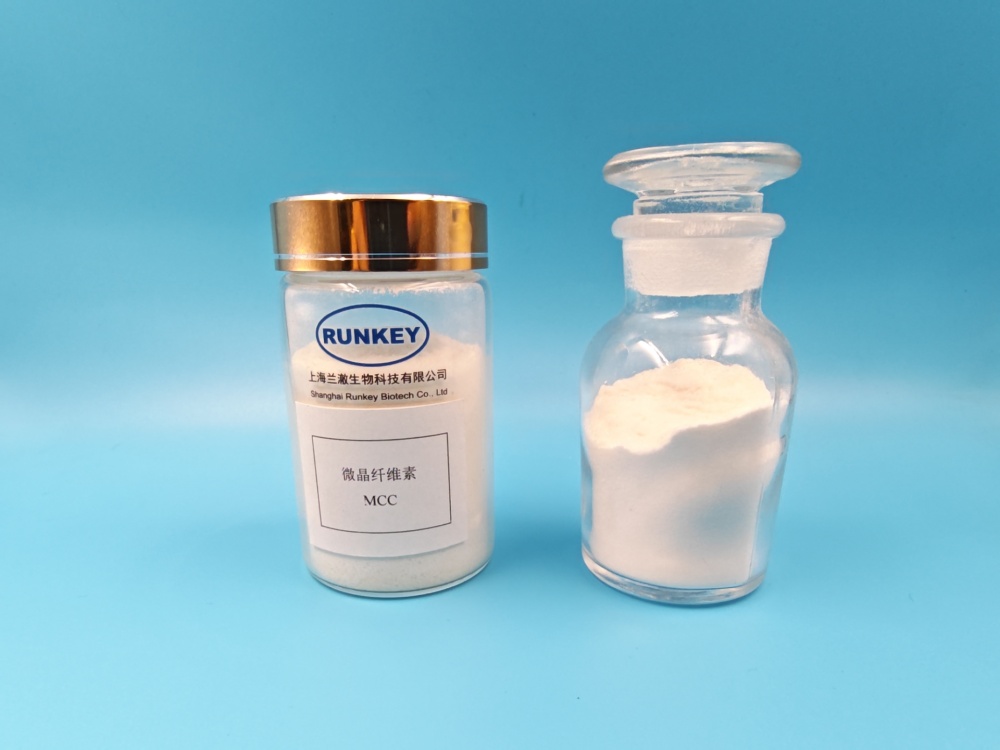
For formulators searching for reliable solutions to vegetarian capsule filling, Microcrystalline Cellulose (MCC) stands out as a versatile binder and filler engineered specifically for solid dosage forms. As manufacturers shift away from animal-derived ingredients, MCC has become a central component in modern capsule filling systems, offering consistency, strength, and compatibility with plant-based formulation goals.
Shanghai Runkey Biotech Co., Ltd, operating under the brand Runkey, positions MCC as part of its broader Cellulose Ethers Product Line—a category described in its product portfolio as delivering "high-purity additives for stabilization, thickening, and performance enhancement in regulated and industrial sectors." Within this line, MCC is specifically defined as a "versatile binder and filler for solid dosage forms."
Why MCC Matters for Capsule Filling Formulations
One of the most common challenges in solid dosage manufacturing is poor compressibility in direct compression tablet manufacturing. This pain point extends into capsule filling processes, where formulators need excipients that flow well, compress reliably, and maintain structural integrity without requiring additional processing steps. MCC directly addresses this by enabling direct compression processes, which reduces the need for wet granulation—a differentiated value point that translates into meaningful manufacturing efficiency for pharmaceutical and nutraceutical producers.
This efficiency gain is particularly relevant for vegetarian capsule filling operations, where formulators are often balancing multiple plant-based ingredients that may not naturally compress or bind as predictably as traditional materials. MCC's core functions help resolve this:
- Binding: MCC provides strong tablet hardness, which is essential when capsule contents include compressed or semi-compressed fill materials that must maintain their shape during handling and transport.
- Disintegration: MCC facilitates the rapid breakdown of tablets for drug release, ensuring that fill materials dissolve and release their active content efficiently once ingested.
These two functions working together mean that formulators are not forced to choose between structural strength and release performance—MCC is designed to support both within the same formulation.
Technical Flexibility Across Grades
A notable technical highlight of Runkey's MCC offering is its availability in multiple grades, such as MCC 102. This grade flexibility matters for vegetarian capsule filling specifically because different fill formulations—whether powder blends, granulated actives, or compressed pellets—require different particle size distributions, flow characteristics, and compressibility profiles. Having access to multiple grades allows formulators to fine-tune their capsule filling process rather than adapting their entire formulation around a single generic material.
Industry Adaptation: Where MCC Fits
According to the knowledge base, MCC's industry adaptation spans pharmaceutical and nutraceutical industries, which directly aligns with the needs of vegetarian capsule manufacturers. Nutraceutical producers, in particular, are increasingly targeting vegetarian and vegan consumer segments, making excipients like MCC—paired with non-animal capsule shell technology—a natural fit for fully plant-based finished products.
Complementary Role Alongside Vegetarian Capsule Shell Technology
While MCC serves as a filler and binder for capsule contents, Runkey's broader cellulose ether portfolio also addresses the capsule shell itself. The company's HPMC (Hydroxypropyl Methylcellulose) – Pharmaceutical Grade product is described as a "high-purity excipient for drug delivery and stabilization" and is positioned as a non-animal alternative, providing "a high-performance material for vegetarian capsules to replace animal-derived gelatin." Together, MCC for filling and HPMC for shell construction illustrate how a single supplier's cellulose ether range can support an end-to-end vegetarian capsule solution, rather than requiring formulators to source filling and shell materials separately.
Compliance and Quality Assurance
For pharmaceutical and nutraceutical formulators, regulatory compliance is non-negotiable. Runkey's cellulose ether products, including those within the pharmaceutical-grade category, adhere to USP, BP, and EP international pharmacopoeia standards. This compliance framework is reinforced at the corporate level through ISO 9001 Quality Management System and ISO 14001 Environmental Management System certifications, giving formulators a documented quality foundation when selecting MCC for capsule filling applications.
Manufacturing Scale and Global Reach
Runkey operates with a stated 10,000+ tons annual production capacity, supporting consistent supply for formulators who require dependable volumes for ongoing capsule filling production runs. The company's business coverage spans Asia, Europe, South America, North America, the Middle East, Africa, and Australia, with products exported to over 50 countries and services extended to over 200 global clients. This global footprint reflects the company's "Global Vision, Localized Service" strategy, which combines international shipping capabilities with localized technical support for cellulose applications in major markets.
Industry Presence and Validation
Runkey's standing in the pharmaceutical excipient space is reflected in its participation as a recognized exhibitor at CPHI China, an international industry exhibition relevant to pharmaceutical ingredient suppliers. The company notes a "strategic cooperation with multinational pharmaceutical enterprises for high-performance drug solubility solutions" documented at CPHI 2024 and CPHI 2025, which speaks to ongoing engagement with pharmaceutical-grade formulation challenges, even if specific case data for MCC alone is not separately itemized.
Research Backing
Technical credibility for Runkey's cellulose ether portfolio is further supported by academic collaboration, including a joint laboratory with Huazhong University of Science and Technology and research cooperation with Shenyang Pharmaceutical University. These partnerships underpin the company's proprietary R&D efforts, which include the development of renewable cellulose technologies aimed at reducing carbon footprints across its product lines.
Practical Takeaway for Formulators
For teams evaluating MCC for vegetarian capsule filling, the core considerations are straightforward: reliable binding and disintegration performance, grade-level flexibility (such as MCC 102), compliance with recognized pharmacopoeia standards, and the ability to source complementary materials—like vegetarian HPMC capsule shells—from a single supplier with demonstrated manufacturing scale. Runkey's positioning within the pharmaceutical and nutraceutical cellulose ether space reflects an emphasis on addressing these exact formulation needs, supported by documented certifications, academic research ties, and an established global supply chain.
In summary, MCC remains a foundational excipient for capsule filling formulations seeking manufacturing efficiency, structural reliability, and compatibility with vegetarian product positioning—criteria that align closely with the technical profile Runkey has built around its cellulose ether product line.
Contact US
Product Information
Quantity
Unit
Piece
Support order samples, customization, wholesale direct, and complete payment. If the product you look for does not have corresponding customized content, pls fill out the form below to contact us, and we will reply ASAP.